Think about how many times you pick up your phone today. You check transit updates, scan mobile tickets, reply to group chats, and capture quick photos. The smartphone has quietly become the central remote control for modern life.
Yet, the rectangular slabs of glass we carry around are changing rapidly. For years, hardware upgrades felt incremental. Companies mostly shouted about slightly faster processors, higher megapixel counts, and thinner bezels.
That era is ending. The next wave of mobile technology is shifting away from simple hardware specs. Instead, it focuses on how phones think, bend, and power themselves through daily use.
Here is a closer look at where smartphone technology is heading, what is changing under the hood, and how these shifts will alter our daily routines.
1. From Static Apps to Autonomous AI Agents
For a long time, voice assistants felt more like glorified search bars. You asked a question, and they spat out a list of blue web links. If you wanted to book a flight or split a restaurant bill with friends, you still had to open four different apps and tap through a dozen screens yourself.
That routine is shifting. Modern devices feature dedicated neural processing chips that run sophisticated machine learning models directly on the hardware.
Instead of just answering questions, mobile software is turning into action-oriented systems.
- Cross-App Automation: Imagine telling your phone to find an email from a contractor, extract the invoice amount, cross-reference your bank balance, and send a payment confirmation. Local software agents can now stitch those tasks together across separate apps without manual copying and pasting.
- Offline Privacy: Because these intelligence models run locally on your phone’s processor rather than sending sensitive personal data to remote cloud servers, your private messages, schedules, and financial notes stay strictly on your device.
You spend less time managing digital paperwork and more time letting the device handle mundane digital chores.
2. The Battery Breakthrough: Silicon-Carbon Power
Battery anxiety has plagued smartphone owners since the dawn of the mobile internet. No matter how powerful a phone became, a heavy day of navigation, photography, and messaging meant hunting for a wall charger by late afternoon.
Physical battery technology is finally catching up with power-hungry software.
Traditional lithium-ion batteries are giving way to silicon-carbon battery chemistry. This new material allows manufacturers to pack significantly more energy density into the exact same physical space.
- Multi-Day Life: Phones are starting to ship with massive battery capacities—ranging well past standard historical limits—without becoming thick, heavy bricks.
- Slim Form Factors: Manufacturers can build ultra-thin chassis profiles without sacrificing all-day longevity.
You leave the house for a weekend trip, forget your charging brick, and your phone simply keeps working. That shift turns a constant daily worry into an afterthought.
3. Foldables Move From Novelty to Normal
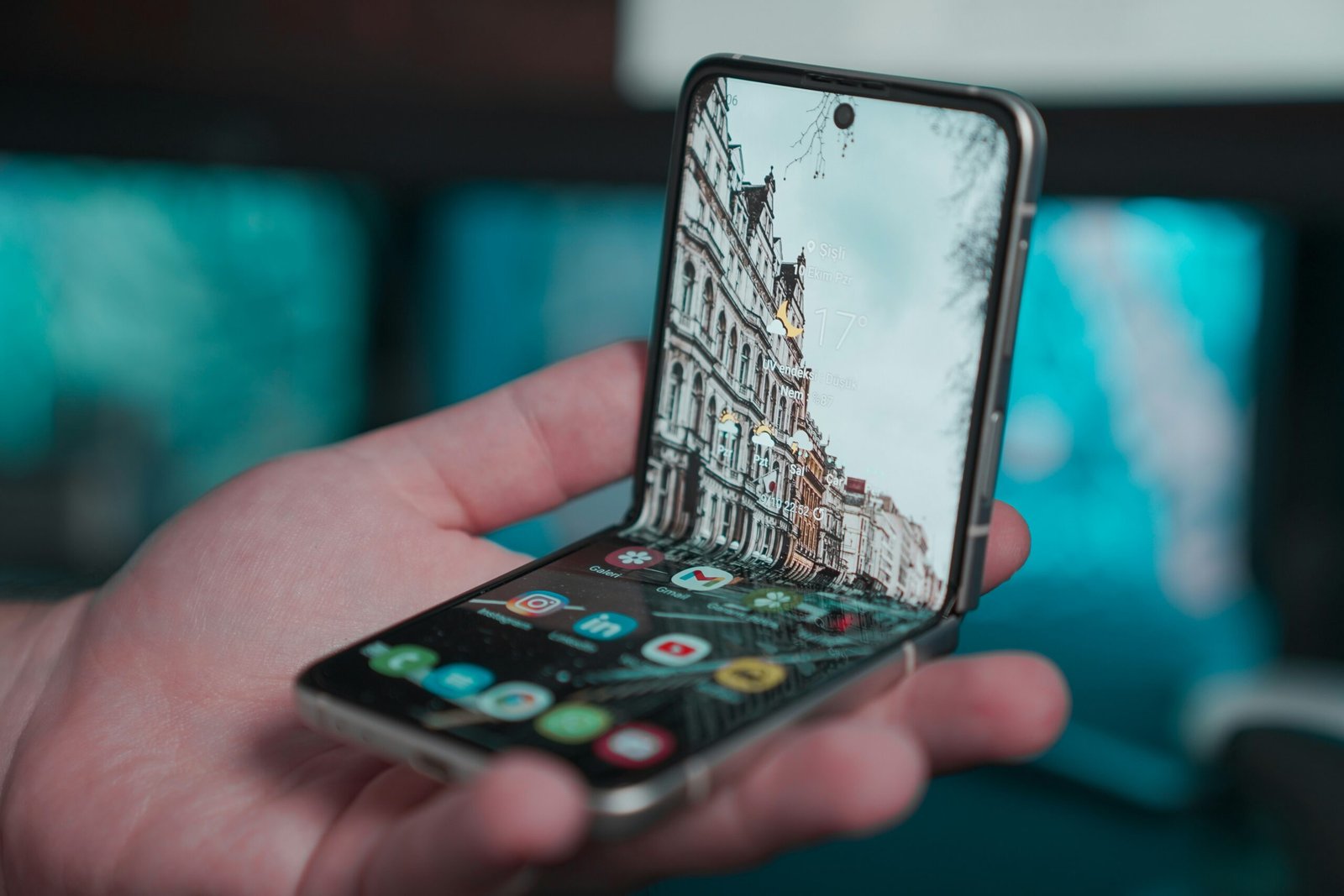
When foldable screens first hit the market, they were expensive luxury items burdened by fragile hinges and an obvious crease right down the middle of the display. Early adopters paid a heavy premium to beta-test a fragile design.
That phase is wrapping up. Flexible OLED technology and aerospace-grade titanium hinge mechanisms have matured.
- The Disappearing Crease: Newer flexible panels use advanced substrate materials that minimize or completely eliminate the central dip, giving users a smooth, uninterrupted canvas.
- Durability: Hinges are now tested to withstand hundreds of thousands of folds, easily surviving years of being opened and closed on daily commutes.
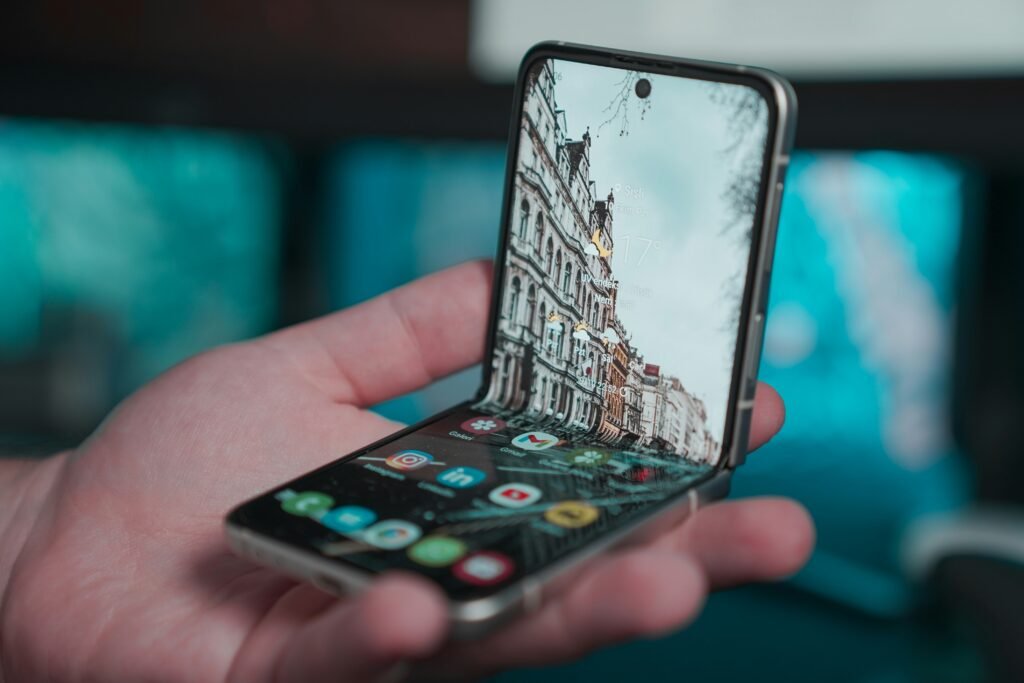
Foldable devices are no longer weird experiments for tech enthusiasts. They offer a compact pocket form factor that expands into a full tablet-sized workspace whenever you need to edit spreadsheets, review blueprints, or watch a movie on a flight.
4. The Move Toward Portless and Buttonless Designs
Look at the edges of your phone. Over the last decade, headphone jacks vanished, and physical home buttons disappeared behind glass touchscreens. The remaining physical buttons and charging ports are next on the chopping block.
[ Traditional Phone ] ──► Has SIM slot, USB-C port, clicky volume buttons
│
▼
[ Next-Gen Phone ] ──► iSIM technology, magnetic wireless power, pressure-sensitive frame
To improve water resistance and minimalist aesthetics, engineers are adopting entirely seamless designs:
- Solid-State Frames: Mechanical volume and power buttons are replaced by pressure-sensitive touch zones on the side of the phone. Haptic motors vibrate subtly to trick your brain into feeling a physical click.
- Wireless Power and iSIM: Integrated SIM (iSIM) technology is baked directly into the phone’s main processor chip, eliminating the physical SIM card tray entirely. Combined with faster magnetic wireless charging pads, phones are losing their openings one by one.
Fewer ports mean fewer entry points for dust, lint, and water damage, creating hardware that lasts significantly longer in harsh environments.
5. Right to Repair and Sustainable Ownership
Hardware longevity is not just about water-resistant seals. For years, buying a new phone meant treating it like a disposable commodity. If the battery degraded or the screen cracked, repair costs often rivaled the price of a brand-new device, pushing consumers into a rigid upgrade cycle every two years.
Consumer pressure and new regulatory frameworks are shifting the industry toward longevity:
- Modular Internal Layouts: Manufacturers are redesigning internal components so everyday parts—like batteries and display assemblies—can be swapped out cleanly without destroying waterproof adhesives.
- Extended Software Support: Flagship brands now promise seven years of operating system updates and security patches, meaning your hardware stays safe and modern long past its initial purchase date.
Instead of rushing out to buy the latest model because last year’s phone slowed down, users are holding onto their devices longer, treating them like durable long-term investments rather than fast-fashion gadgets.
Looking Ahead
The smartphone of the near future will not necessarily look radically different from a distance. It will still be a slim, rectangular piece of glass and metal.
Underneath that familiar exterior, however, the experience is transforming completely. With local intelligence handling routine chores, batteries that easily outlast a weekend, and displays that bend to fit your workflow, the phone is finally evolving from a distracting screen into a truly seamless extension of yourself.
Leave a Reply