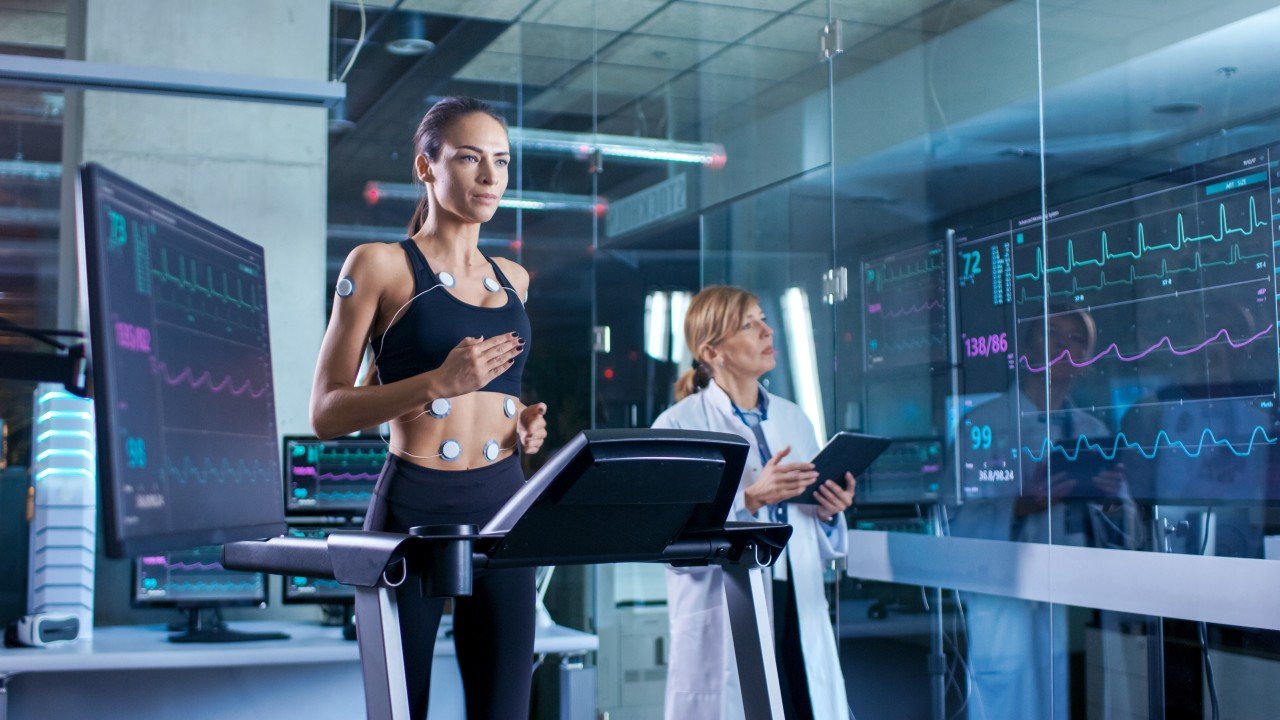
Technology has become a regular part of sports and fitness.
Athletes use sensors to track movement. Coaches analyze video. Fitness applications record workouts. Smart equipment provides performance information.
Even casual users can now access tools that were once available mainly to professional athletes.
The result is a more data-driven approach to exercise.
Fitness Tracking
Wearable devices can record steps, distance, exercise duration, and other activity measurements.
For someone trying to become more active, seeing daily information can provide motivation.
Instead of simply thinking, “I should walk more,” a person can set a realistic activity target and monitor progress.
The data is not perfect, but it can help users understand their habits.
Heart Rate Monitoring
Many fitness devices can monitor heart rate during exercise.
This can help users understand how their body responds to different levels of activity.
A person might notice that a particular workout produces a much higher heart rate than expected.
However, consumer devices have limitations.
Their measurements should not automatically be treated as medical diagnoses.
For serious concerns, professional advice remains important.
Video Analysis in Sports
Professional athletes have used video analysis for years.
Modern software makes it easier to examine performance in detail.
A football coach can review player positioning. A tennis coach can analyze a player’s serve. A cricket coach can study bowling technique.
Video can reveal mistakes that an athlete may not notice during the actual performance.
Slow-motion playback can make small movements easier to understand.
Sensors and Motion Tracking
Sports technology can also use sensors to measure movement.
Athletes may wear devices that track speed, acceleration, distance, or changes in direction.
This information can help coaches understand workload.
If an athlete’s training intensity suddenly increases, coaches can adjust the program.
The goal is not simply to collect as much data as possible.
Too much information can become confusing.
Useful data is data that helps someone make a better decision.
Smart Gym Equipment
Gyms are becoming more connected too.
Modern exercise machines may record workouts and provide information about repetitions, resistance, duration, and other measurements.
Some systems can synchronize information with mobile applications.
This can make it easier for users to monitor progress over time.
Technology and Home Workouts
Home fitness has also benefited from technology.
People can follow guided workouts through phones, tablets, televisions, or dedicated fitness systems.
Someone who does not have access to a gym can still follow structured exercise sessions at home.
The quality of online fitness content varies, so users should choose programs from credible sources and avoid exercises that feel unsafe or inappropriate for their abilities.
Technology in Professional Competitions
Technology is now part of many professional sports.
Video review systems can help officials make difficult decisions.
Electronic timing systems can measure performance extremely accurately.
Tracking systems can provide information about player movement.
These tools can improve fairness, although they also create debates about how much technology should influence decisions.
Data and Team Strategy
Sports teams increasingly use data to make strategic decisions.
A team may analyze player performance, opponent tendencies, and historical results.
For example, a basketball team can examine where an opponent is most effective at scoring.
A cricket team can study how a batter performs against different types of bowling.
Data does not guarantee victory.
Sports remain unpredictable.
But better information can improve preparation.
The Risk of Obsessing Over Numbers
There is a downside to constant measurement.
Some people become so focused on numbers that they stop enjoying exercise.
A workout becomes successful only if an application records a particular score.
That can create unnecessary pressure.
Fitness should support overall well-being, not turn every activity into a competition with a device.
The Future of Sports Technology
Future systems may provide even more detailed information.
AI could analyze movement patterns, while sensors become smaller and more comfortable.
Training systems may become increasingly personalized.
Athletes could receive feedback tailored to their specific performance.
Still, coaches and athletes will remain important.
Technology can measure movement, but experienced professionals understand context, motivation, technique, and individual differences.
Final Thoughts
Technology has changed sports by making performance easier to measure and analyze.
From fitness watches to professional video systems, digital tools help athletes and ordinary people understand activity in new ways.
But technology should remain a tool.
The best fitness system is not necessarily the one with the most sensors.
It is the one that helps a person stay active, understand progress, and maintain healthy habits without becoming overwhelmed by numbers.
Sometimes the simplest goal is still the best one: move more, stay consistent, and enjoy the process.
Leave a Reply