Remember the agonizing wait of downloading a video over 3G? You stared at a crawling progress bar, crossed your fingers that a tunnel would not drop your connection, and hoped the file would finish before your lunch break ended.
Then 4G arrived and changed everything. It made mobile video streaming smooth, enabled rideshare apps to track cars in real time, and turned our smartphones into portable command centers.
Now, a new wireless standard is reshaping our digital infrastructure. 5G is not just a faster version of 4G. It represents a fundamental shift in how devices connect, communicate, and process data.
Let us look at how 5G is changing internet technology, where it makes a tangible difference in daily life, and why the biggest shifts happen far behind the scenes.
1. Speed, Latency, and the Real Difference
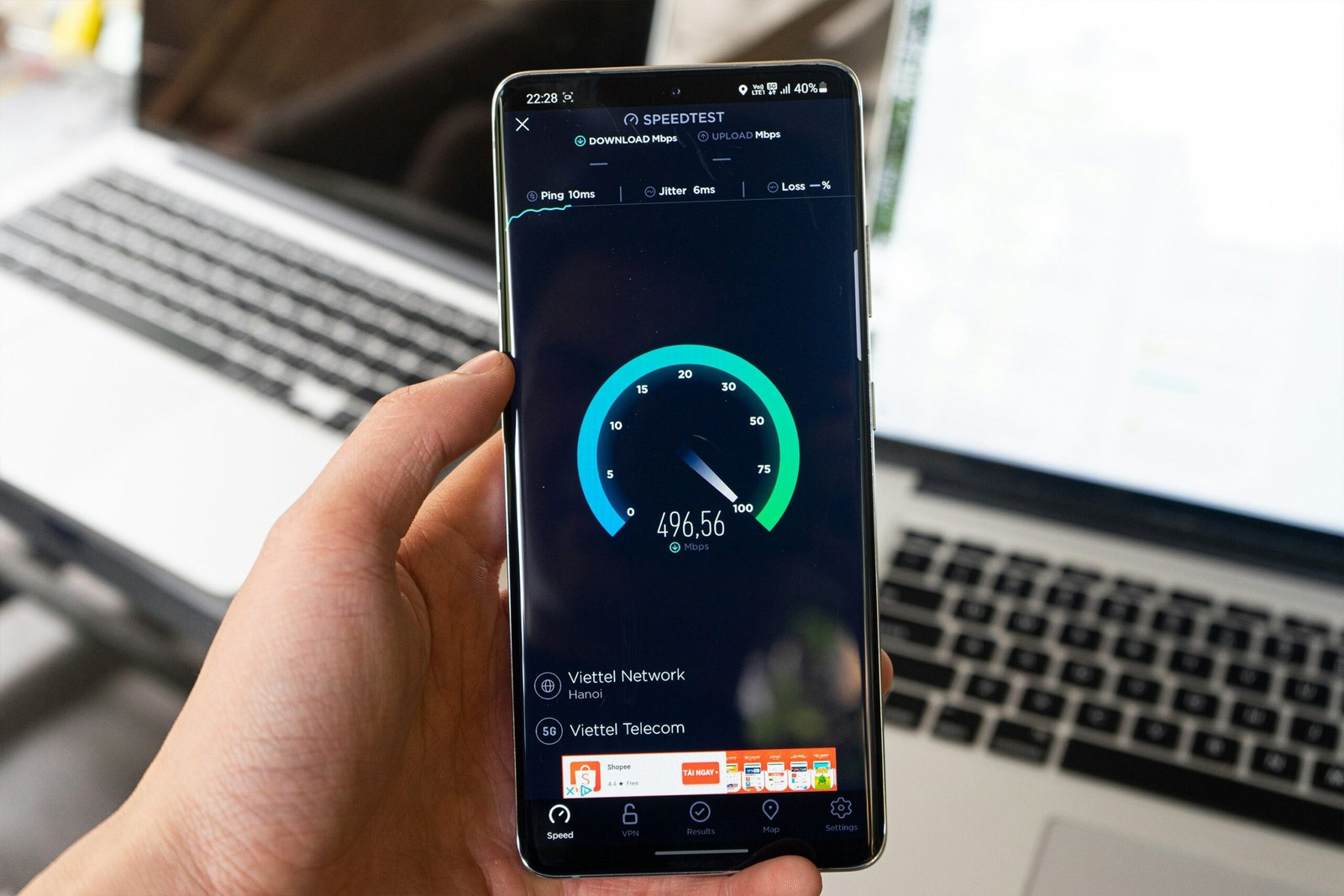
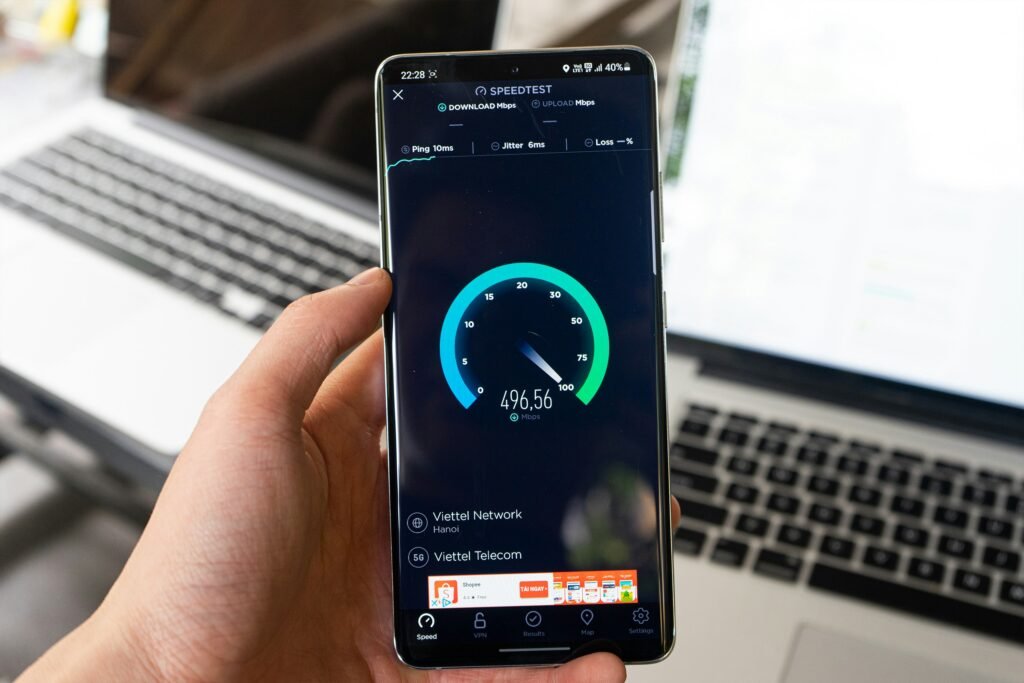
When mobile carriers market 5G, they talk endlessly about blazing download speeds. While pulling down a full movie in seconds is nice, speed is only half the story.
The real secret weapon of 5G is low latency.
Latency measures the delay between sending a command and seeing a response. Think of it like a conversation: high latency means a long awkward pause before the other person answers. Low latency means a snappy, instantaneous back-and-forth.
[ 4G LTE Latency ] ──► ~50 to 100 milliseconds (Noticeable lag for real-time tasks)
[ 5G Network ] ──► ~1 to 5 milliseconds (Virtually instantaneous response)
- 4G Latency: Usually hovers around fifty to one hundred milliseconds. That is fine for streaming music or browsing websites, but too slow for applications requiring split-second precision.
- 5G Latency: Drops down to a single digit—sometimes under five milliseconds.
That microsecond response time opens up entirely new categories of technology that simply stuttered or failed on older networks.
2. Remote Work and the Death of Public Wi-Fi Paranoia
For years, remote workers, freelancers, and business travelers shared a common frustration: hunting for secure Wi-Fi at coffee shops, airports, and hotels. Public Wi-Fi networks are notoriously slow, crowded, and risky for data privacy.
5G changes how we connect on the go.
With multi-gigabit speeds available straight through cellular airwaves, your laptop connects to a personal mobile hotspot that matches or beats home broadband.
- Zero Lag Video Calls: You can hop onto an HD video conference from a crowded park without freezing, pixelating, or dropping audio.
- Instant Cloud Sync: Massive graphic design files, video exports, and code repositories upload to cloud servers in seconds rather than hours.
Your workspace is no longer tethered to a physical router or a café’s password-protected network. Wherever you have cellular coverage, you have a high-speed office.
3. Transforming Entertainment and Immersive Media
Media consumption has evolved past flat screens and standard high-definition video. 5G acts as the backbone for heavy bandwidth and high-framerate media formats.
Cloud Gaming Without the Console
You no longer need a bulky gaming PC or a dedicated console to play visually stunning video games. Cloud gaming services stream complex game graphics directly to your phone, tablet, or cheap laptop, running the heavy calculations on remote server racks.
On 4G, cloud gaming often suffered from input lag—you pressed a button on your controller, and your character reacted half a second later. 5G cuts that delay to near zero, making cloud gaming feel just like playing on physical hardware sitting right in front of you.
Augmented and Virtual Reality
AR and VR headsets used to require heavy cable cords plugged into powerful desktop computers because mobile chips could not render immersive 3D worlds on their own.
With 5G handling the heavy data lifting, lightweight AR glasses can stream rich digital overlays directly into your field of view in real time. Whether you are walking through a historic city and seeing digital reconstructions of ancient ruins or reviewing a 3D architectural model on an empty table, the network keeps everything synchronized without stuttering.
4. The Smart City and Transportation Revolution
Urban infrastructure relies on fast data processing. 5G serves as the nervous system for modern cities, connecting thousands of sensors, vehicles, and public utilities.
Public Transit and Traffic Flow
Traffic lights, public buses, and city surveillance systems talk to each other across 5G networks. Instead of running on rigid timer schedules, traffic management systems adjust signal timings dynamically based on live vehicle density, easing congestion before massive bottlenecks form.
Autonomous Vehicles
Self-driving car projects rely heavily on ultra-reliable, low-latency wireless communication.
[ Autonomous Vehicle Sensors ] ──► (Scans road, pedestrians, hazards)
│
▼
[ 5G Cloud Computing & V2X ] ──► (Instantly shares data with nearby cars & traffic grids)
│
▼
[ Split-Second Reaction ] ──► (Applies brakes or alters steering safely)
While self-driving cars process most sensor data locally, they use 5G to communicate with surrounding vehicles and infrastructure (known as V2X communication). If a car two blocks ahead slams on its brakes around a blind corner, your autonomous vehicle receives that warning signal instantly over 5G and slows down before your human eyes even see the brake lights.
5. Healthcare and Remote Surgery
Perhaps the most life-changing application of 5G infrastructure happens in medicine.
Specialized medical care is often concentrated in major urban hospitals. Patients living in rural towns or remote areas struggle to access top-tier surgical specialists without hours of travel.
Low-latency wireless networks make remote robotic surgery viable:
- A specialist surgeon sits in a major metropolitan hospital console.
- Robotic surgical arms in a rural clinic mimic the surgeon’s hand movements across the country.
- Because 5G latency is practically zero, the robotic tools respond in real time, allowing specialists to perform delicate procedures safely from hundreds of miles away.
Closer to home, wearable health monitors use 5G to stream continuous electrocardiograms, blood glucose levels, and vital signs directly to medical providers, alerting clinics to dangerous changes instantly.
6. The Hurdles: Coverage Gaps and Infrastructure
Despite the massive performance leap, 5G deployment is not completely finished, and it comes with real engineering hurdles.
The Physics of High-Frequency Waves
5G operates on different frequency bands. While ultra-fast 5G uses high-frequency millimeter waves, those signals struggle to travel long distances, bend around corners, or pass through thick concrete walls.
That is why carriers must install many smaller cell towers on light poles and building facades rather than relying on a few massive radio masts miles away. Building that dense urban network takes time and heavy capital investment.
Battery Drain on Early Devices
Early generations of 5G modems pulled a lot of power, leading to noticeable battery drain on smartphones. Fortunately, newer chip designs manage power efficiency much better, keeping all-day battery life intact while maintaining high-speed connections.
Looking to the Connected Horizon
The transition to 5G is not just about loading web pages a few seconds faster. It is building the digital highway for the next few decades of technological innovation.
By eliminating lag, expanding bandwidth, and connecting billions of devices seamlessly, 5G moves the internet from a screen on your desk into the very fabric of our physical world.
Leave a Reply