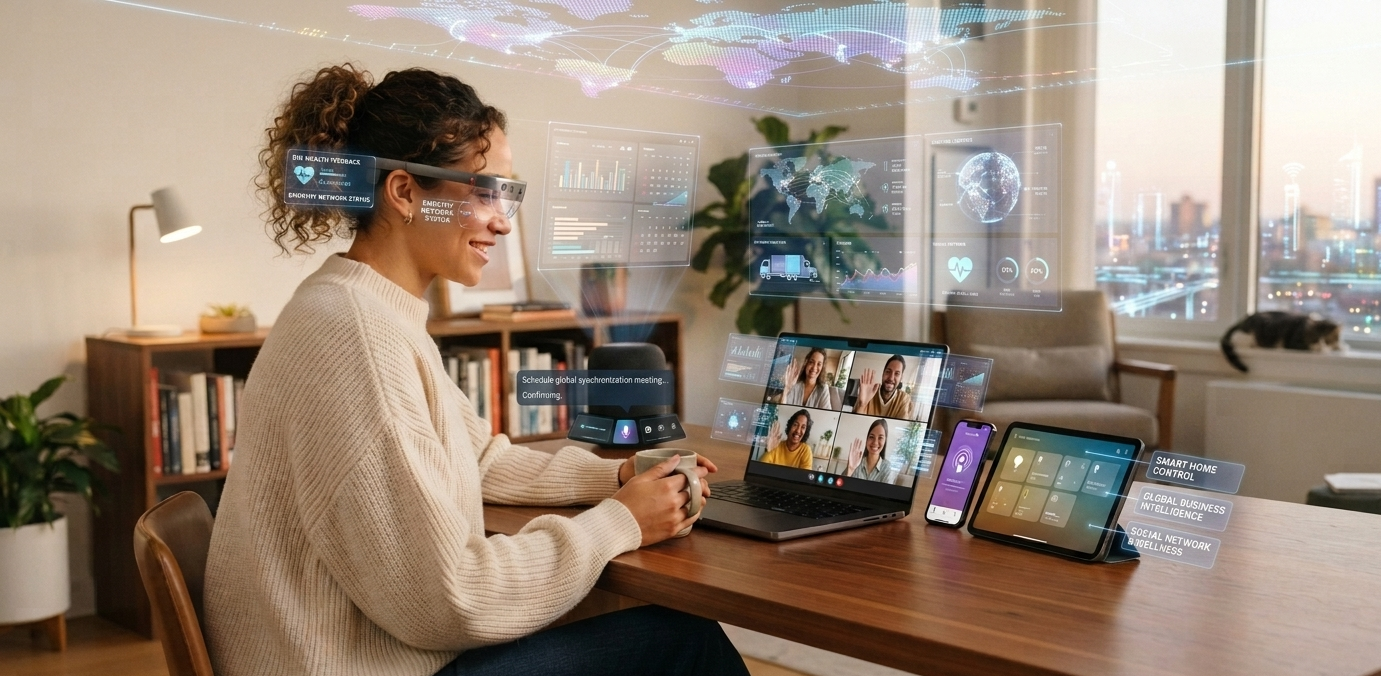
Technology has become such a normal part of everyday life that we often forget how quickly things have changed. A smartphone in our pocket can handle tasks that once required a computer, a camera, a map, a calculator, and even a physical bank. We can attend meetings from home, order food within minutes, store thousands of photos online, and communicate with someone on the other side of the world almost instantly.
What makes modern technology interesting is not just the devices themselves. It is the way these tools are changing how people solve problems, run businesses, study, communicate, and make decisions. From artificial intelligence and cloud computing to cybersecurity and smart devices, technology is becoming more connected and more useful every year.
The Growing Role of Artificial Intelligence
Artificial intelligence, commonly called AI, has moved from being something people mostly saw in science-fiction movies to a practical technology used in everyday applications. Search engines, recommendation systems, navigation apps, customer-service chatbots, and many productivity tools use AI in different ways.
For example, when a streaming service recommends a movie that matches your interests, an AI system may be analyzing your previous choices. When your email automatically separates spam messages from important emails, intelligent algorithms are helping behind the scenes.
Generative AI has also changed the conversation around technology. People can now use AI tools to brainstorm ideas, summarize information, write drafts, create images, analyze data, and assist with programming. This does not mean that humans are becoming unnecessary. In many situations, the best results come from combining human judgment with machine assistance.
A student, for instance, might use an AI tool to understand a difficult programming concept and then write and test the actual code independently. A small business owner might use technology to prepare a first draft of a product description but still edit it to make sure it accurately represents the product.
The important lesson is that AI works best as a tool rather than a replacement for critical thinking.
Cloud Computing Makes Work More Flexible
Another major change in technology is cloud computing. Instead of keeping every file and application on one computer, people and organizations can use internet-based services to store information and access software.
Think about a student working on an assignment. With cloud storage, the document can be started on a laptop, edited on a phone, and completed on another computer. A team working on a business project can also share files without constantly sending different versions through email.
Businesses benefit even more from cloud technology. A company does not always need to purchase and maintain large amounts of physical hardware. It can rent computing resources when needed and increase or decrease those resources as its requirements change.
This flexibility has become especially useful for remote and hybrid work. Employees can collaborate from different cities or even different countries while using the same online platforms.
Of course, cloud computing also creates responsibilities. Important information needs to be protected with strong passwords, access controls, encryption, and regular backups. Convenience should never come at the expense of security.
Cybersecurity Is No Longer Optional
As more personal and business activities move online, cybersecurity has become one of the most important areas of technology.
People regularly share sensitive information through websites and applications. This can include passwords, financial details, personal documents, photographs, and business information. If these accounts are poorly protected, attackers may find opportunities to steal information or gain unauthorized access.
Some security problems are surprisingly simple. A person may use the same password for five different accounts. If one service experiences a data breach, attackers could try that password on other websites.
Using unique passwords and enabling multi-factor authentication can significantly improve account security. Keeping operating systems and applications updated is equally important because software updates often include security fixes.
Businesses have an even greater responsibility. A small company might assume that cybercriminals only target large corporations, but that is not always true. Smaller organizations can also become targets because they may have limited security resources.
Cybersecurity is therefore not just an IT department issue. Employees, managers, students, freelancers, and ordinary internet users all have a role to play.
Smartphones Have Become Everyday Computers
The modern smartphone is one of the clearest examples of how technology has changed daily life. A single device can perform dozens of functions.
People use smartphones to communicate, take photographs, navigate unfamiliar places, manage finances, attend online classes, watch videos, read news, shop, and manage work.
Mobile applications have also created opportunities for small businesses. A local clothing seller can advertise products through social platforms, communicate with customers through messaging applications, receive digital payments, and arrange delivery without owning a physical store.
However, constant smartphone use has its drawbacks. Notifications can interrupt concentration, social media can consume large amounts of time, and excessive screen use can make it difficult to disconnect from work or study.
The goal should not be to avoid technology completely. Instead, people can learn to use it intentionally. Turning off unnecessary notifications, setting screen-time limits, and creating periods without phones can make digital life more manageable.
Smart Homes and the Internet of Things
Technology is also moving into homes through the Internet of Things, or IoT. This refers to physical devices that can connect to networks and exchange information.
Smart bulbs, security cameras, watches, thermostats, appliances, and other connected devices are becoming increasingly common. A person might control lights from a smartphone or receive an alert when a security camera detects movement.
The real value of IoT is not simply being able to control devices remotely. Connected systems can automate routine tasks. For example, a smart home could adjust lighting based on the time of day or send notifications when unusual activity is detected.
But connected devices also introduce security concerns. A poorly secured smart device can become an entry point for attackers. Consumers should therefore check privacy settings, change default passwords, install updates, and purchase devices from reputable manufacturers.
Technology Is Transforming Education
Education has changed dramatically because of the internet. Students no longer have to depend entirely on physical textbooks or classroom lectures. Online courses, digital libraries, educational videos, simulations, and interactive learning platforms provide additional ways to study.
This can be particularly useful when a student struggles with a specific topic. Instead of reading the same explanation repeatedly, the student can find a video, animation, practice quiz, or alternative explanation.
Teachers also benefit from digital tools. They can prepare presentations, organize assignments, communicate with students, and use online assessments to identify areas where students need more help.
Still, technology does not automatically create better learning. A student who spends an hour watching educational videos without practicing the material may learn less than someone who studies for thirty minutes and actively solves problems.
Technology should support good learning habits, not replace them.
The Future of Work
Automation is another area receiving significant attention. Software and machines can now handle many repetitive tasks, including data entry, basic customer support, scheduling, document processing, and certain manufacturing operations.
This creates understandable concerns about employment. Some jobs may shrink or change as automation becomes more capable. At the same time, technology creates new roles in areas such as software development, cybersecurity, data analysis, cloud computing, AI, digital marketing, and technical support.
The most valuable skill may therefore be adaptability. Someone who learns continuously can adjust more easily when tools and workplace requirements change.
For example, a graphic designer may now use AI-assisted design software, while a programmer may use coding assistants. The technology does not remove the need for these professionals. Instead, it changes how they perform parts of their work.
The Importance of Responsible Technology
As technology becomes more powerful, responsible use becomes increasingly important. Privacy, misinformation, online scams, AI-generated content, digital addiction, and cybersecurity are genuine concerns.
Users should think before sharing personal information online. They should verify suspicious messages, avoid clicking unknown links, and question information that seems designed to create panic or outrage.
Technology companies also have responsibilities. They need to consider user privacy, security, accessibility, and the possible consequences of their products.
There is no single solution to every technology-related problem. Education, responsible design, sensible regulations, and informed users all have a role.
Final Thoughts
Technology is not simply about faster computers or newer smartphones. It is about changing the way people interact with information and with one another.
AI can help people work with information more efficiently. Cloud computing makes collaboration easier. Smartphones put powerful tools in our hands. Cybersecurity protects increasingly valuable digital lives, while IoT connects physical objects to digital systems.
At the same time, technology requires judgment. The newest tool is not always the best tool, and convenience should not replace privacy or security.
The future will almost certainly bring technologies that seem unusual today. Some will succeed, others will disappear, and many will become so common that we eventually stop thinking of them as new. What matters most is how people choose to use these technologies.
A healthy relationship with technology is not about using more technology. It is about using the right technology for the right purpose, understanding its benefits and limitations, and staying willing to learn as the digital world continues to change.
Leave a Reply